
We Analysed 50 Tradie Websites in Western Sydney: Here Is What We Found
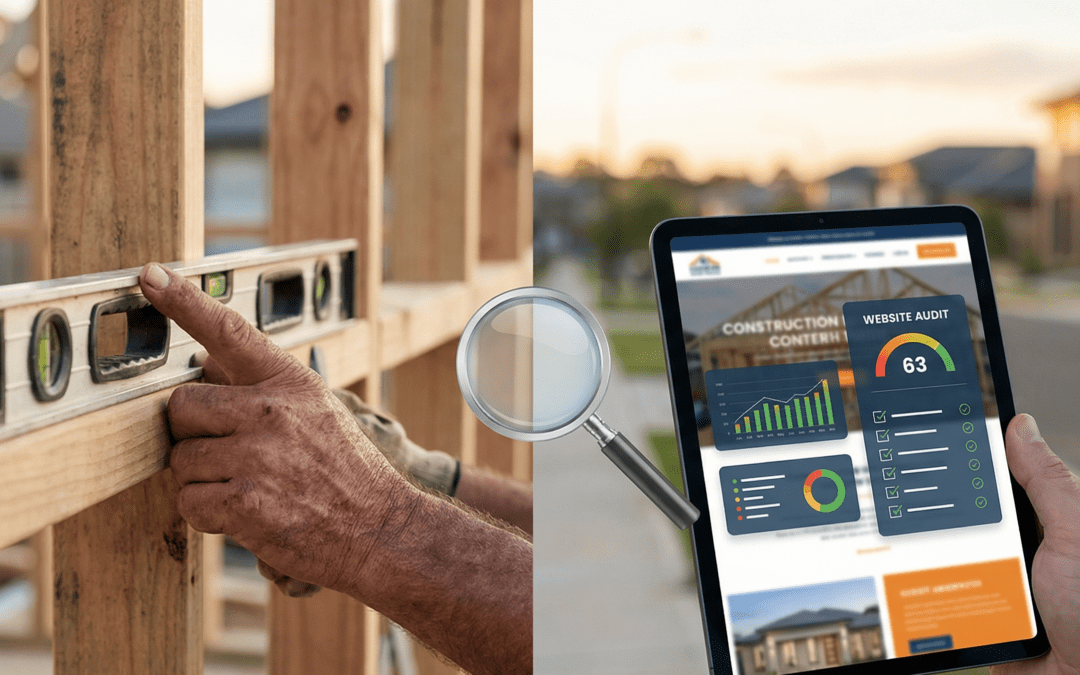
We talk to tradies every week at our Camden office. Electricians, plumbers, builders, landscapers, fencers, pest controllers. The conversation almost always starts the same way: “I know my website is not great, but I do not know what is actually wrong with it.”
So we decided to find out. We looked at 50 tradie websites across Western Sydney and the Macarthur region to see how they stack up on the things that actually matter for getting found on Google and turning visitors into paying customers.
The results were eye opening. Most of these websites were not just underperforming. They were actively working against the businesses they were supposed to help.
How We Chose the 50 Websites
We focused on trade and service businesses across Camden, Campbelltown, Narellan, Penrith, Liverpool, and surrounding suburbs. The trades included electricians, plumbers, landscapers, builders, pest controllers, fencing companies, and similar service businesses.
We checked each site against a set of criteria that directly affects search engine rankings and lead generation. No paid tools were needed for most of these checks. Anyone with a phone and a few minutes could verify the same things.
Finding 1: 72% Had No Clear Call to Action Above the Fold
The first thing a visitor sees when they land on your website matters more than almost anything else. If there is no clear instruction telling them what to do next, most people leave.
Out of 50 tradie websites, 36 had no visible call to action in the top section of the page. No “Call Now” button. No “Get a Free Quote” form. No phone number in a prominent position. Some had sliders with stock images. Others had large blocks of text about the company history. A few had nothing but a logo and a menu.
This is the single biggest conversion killer on small business websites. People land on the page, do not immediately see how to contact you, and hit the back button. Your website design needs to guide visitors toward action from the moment they arrive.
Finding 2: 64% Were Painfully Slow on Mobile
Google has confirmed that page speed is a ranking factor. More importantly, real visitors abandon slow sites. When over 60% of web traffic comes from mobile devices, a site that takes five or six seconds to load on a phone is losing visitors before they even see the content.
We tested all 50 sites using Google’s free PageSpeed Insights tool. 32 of them scored below 50 out of 100 on mobile performance. The most common culprits were oversized images that had not been compressed, no caching configured, bloated page builders, and cheap hosting.
A slow website does not just frustrate visitors. It tells Google that your site provides a poor experience, which pushes you further down in search results.
Finding 3: 80% Had Weak or Missing Meta Titles and Descriptions
Your meta title and description are what show up in Google search results. They are your first impression. If they are missing, generic, or stuffed with keywords, you are losing clicks to competitors who have taken the time to write them properly.
40 out of 50 sites had at least one of these problems:
- Meta titles that just said the business name with no mention of the service or location
- Default WordPress descriptions like “Just another WordPress site”
- Titles that were too long and got cut off in search results
- No meta description at all, leaving Google to pull random text from the page
This is one of the easiest things to fix and one of the most overlooked. A well written meta title and description can increase your click through rate by a noticeable margin without spending a dollar on ads.
Finding 4: Only 14% Had a Properly Optimised Google Business Profile
Your Google Business Profile is what shows up in the map pack, that box of three businesses that appears at the top of local search results. For tradies and service businesses, the map pack is often where the first call comes from.
Only 7 out of 50 businesses had a GBP that we would consider properly set up. The rest had one or more of these issues:
- Wrong or missing business categories
- No services listed
- No photos, or only a logo
- Fewer than five reviews
- Inconsistent business name or address compared to the website
- No posts or updates in over 12 months
Your GBP is free to set up and free to maintain. There is no excuse for leaving it incomplete. For local businesses, it is often the highest return activity you can do for your online visibility.
Finding 5: 58% Had No Service Area Pages
If you are a plumber who works across Camden, Campbelltown, Narellan, and Oran Park, Google needs to know that. The most effective way to signal your service area is with dedicated pages for each location you serve.
29 out of 50 websites had no location specific content at all. The business served multiple suburbs but the website only mentioned one location, if any. Some sites did not mention a location anywhere on the page.
Without service area pages, you are leaving it up to Google to guess where you work. Google does not guess well. Your competitors who have built out location pages are going to appear in searches for those areas, and you will not.
Finding 6: 46% Were Still Using HTTP Instead of HTTPS
Google has listed HTTPS as a ranking signal since 2014. It is 2026, and nearly half of the tradie websites we looked at were still running on unsecured HTTP connections.
Beyond the ranking impact, visitors see a “Not Secure” warning in their browser when they visit an HTTP site. For a business trying to build trust, that warning is a deal breaker. An SSL certificate, which enables HTTPS, is inexpensive and often included with quality website hosting.
Finding 7: 70% Had No Blog or Content Hub
Content is one of the strongest signals you can send to Google that your website is relevant, active, and worth ranking. Blog posts, guides, and how to articles give Google more pages to index, more keywords to associate with your business, and more reasons to rank you above a competitor with a five page brochure site.
35 out of 50 websites had no blog at all. Of the 15 that did, most had not published anything in over a year. A handful had two or three posts that were clearly written as an afterthought.
You do not need to publish every week. But a business that publishes one quality article a month will build a significant advantage over one that publishes nothing.
Finding 8: Only 6% Had Any Form of Schema Markup
Schema markup is code that helps Google understand what your business does, where it is located, what services it offers, and what customers say about it. It can improve how your site appears in search results by adding star ratings, service lists, and other rich information.
Only 3 out of 50 sites had any schema markup at all. This is an area where most small businesses are behind simply because it requires some technical knowledge. But it is also an area where a small investment can create a visible edge in search results.
What This Means for Your Business
If your website has several of the issues listed above, you are not alone. Most tradie and service business websites in Western Sydney and the Macarthur region have the same problems. That is the bad news.
The good news is that most of your competitors are in the same boat. The bar is low. A business that fixes even half of these issues will jump ahead of the majority of its local competition.
Here is a simple priority list:
- Fix your call to action. Make your phone number and a contact form visible the moment someone lands on your site.
- Speed up your site. Compress images, upgrade your hosting, and remove anything that slows it down.
- Write proper meta titles and descriptions for every page.
- Claim, complete, and optimise your Google Business Profile.
- Build out service area pages for every suburb you work in.
- Switch to HTTPS if you have not already.
- Start publishing one piece of useful content per month.
Where to Start
If you are a tradie or small business owner in the Macarthur area and you want to know exactly where your website stands, contact us for an honest assessment. We will tell you what is working, what is not, and what to fix first. No jargon, no sales pitch, no lock in contracts.
Your website should be your hardest working employee. If it is not bringing in enquiries, something needs to change.